


This is one of the most common questions I get from clients.
The honest answer?
It depends.
If buying organic means you’re going into debt, stressing over every grocery trip, or avoiding healthy foods altogether because they’re too expensive, then no, it’s probably not worth it.
But if you have room in your budget, I do believe there is value in being intentional about the quality of the food you put into your body.
Notice I said intentional, not perfect.
Too many people get caught up in the all-or-nothing mindset. They think if they can’t afford 100% organic, grass-fed, pasture-raised, and non-GMO everything, then there’s no point in trying.
That’s simply not true.
Eating more whole foods will always beat eating more processed foods, regardless of whether every item in your cart has an organic label.
That said, when your budget allows, upgrading the quality of your food can be a worthwhile investment.
Think of Food as an Investment
Most people view food as an expense.
I try to view it as an investment.
The food you eat becomes your energy, your recovery, your hormones, your performance, and ultimately your long-term health.
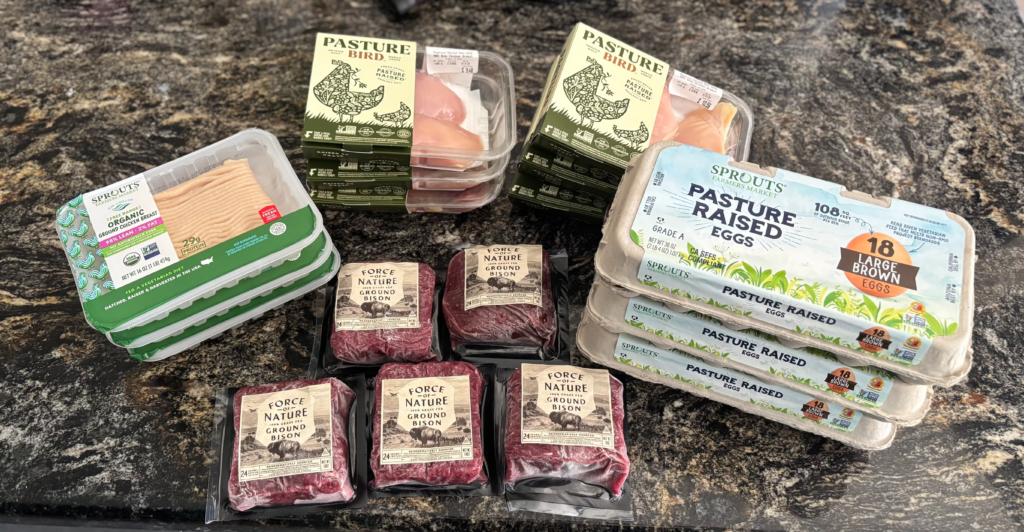
When I spend a little more on quality protein, fresh produce, or pasture-raised eggs, I don’t see it as spending extra money. I see it as investing in the body God gave me to steward.
That doesn’t mean every meal needs to be perfect.
It means making better choices more often.
Start With the Foods You Eat Most
One mistake people make is trying to overhaul their entire grocery cart overnight.
Instead, focus on the foods you eat every single week.
For me, that might be eggs, chicken, ground beef, fruit, and vegetables.
If you eat eggs every morning, spending a little more on higher-quality eggs may make more sense than buying an organic version of a food you rarely eat.
Small upgrades are often more sustainable than complete overhauls.
Don’t Overlook Local Farmers
One of the best ways to improve food quality without destroying your budget is to buy locally whenever possible.
Many people assume farmers markets are expensive, but that isn’t always the case.
I’ve found local farms selling eggs, produce, honey, and meat at prices that are comparable to grocery stores, sometimes even cheaper.
The added benefit is that you can often speak directly with the people producing your food. You can ask questions about how the animals are raised, what the farming practices look like, and where your food is coming from.
That’s something you can’t do at a large supermarket.
Focus on Progress, Not Perfection
I think nutrition has become far more complicated than it needs to be.
Some people spend so much time arguing about organic versus conventional that they completely ignore the bigger picture.
If you’re eating fast food five times a week, switching to organic kale isn’t the answer.
Start with the basics.
Eat more protein.
Eat more fruits and vegetables.
Drink more water.
Cook at home more often.
Move your body regularly.
Sleep well.
Those habits will have a much bigger impact on your health than obsessing over labels.
The Bigger Picture
At the end of the day, nobody earns a trophy for having the most expensive grocery cart.
The goal isn’t to buy the perfect foods.
The goal is to build a lifestyle that supports your health for the long haul.
If you can afford to buy more organic produce, pasture-raised eggs, or locally sourced meats, that’s great.
If you can’t, don’t let that stop you from making healthier choices.
A conventionally grown apple is still better than a bag of chips.
A home-cooked meal is still better than another drive-thru dinner.
The best nutrition plan isn’t the most expensive one.
It’s the one you can consistently follow.
Start where you are.
Buy the best food your budget allows.
Keep improving over time.
Your health isn’t built by one grocery trip. It’s built by the choices you make week after week, year after year.